
Only 3% of Irish people invest according to new banking survey


It comes ahead of the introduction of a new Investment Account scheme in July next year, which will have no minimum contribution.
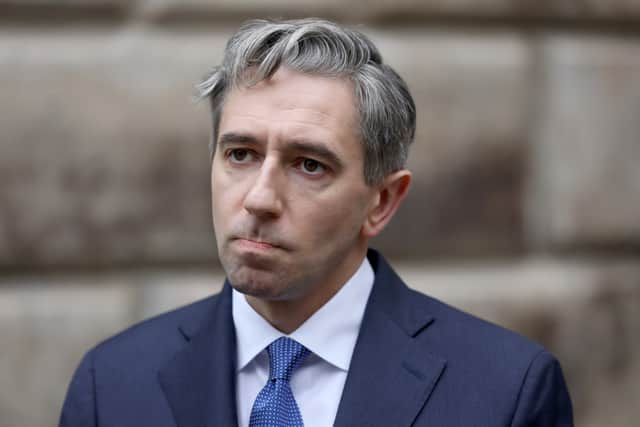
Only 3% of Irish people invest their money, according to a banking survey launched by Tánaiste Simon Harris.
The 2026 Consumer Sentiment Banking Survey found that 5% of men and 2% of women report having an investment account, with just 1% of respondents owning crypto products.
It comes ahead of the introduction of a new Investment Account scheme in July next year, which will have no minimum contribution and a tax-free threshold of 50,000 euro.
Finance Minister Simon Harris said on the Understanding Money with Eoin McGee podcast in July that he has “a very straightforward approach” to his finances.
He described himself as a “credit union saver” and said he has no investments.
Launching the survey on Monday, he said investing can feel “too complicated” and the introduction of an Investment Account will “make investing simpler and more accessible”.
“We are a nation of savers, but far too few people see investing as an option open to them,” he said.
“For many, investing feels too complicated, too expensive or simply out of reach. I want to change that.
“People should not need substantial savings or specialist knowledge just to consider putting money aside for their longer-term future.
“This is not about telling everyone to invest. There are risks, and people need clear information to understand them.
“It is about breaking down unnecessary barriers and giving more people the confidence and opportunity to make the financial choices that are right for them.”
The survey, carried out by Ipsos Behaviour and Attitudes for the Department of Finance, reported a doubling in the amount of people using Revolut as their main account from 3% to 6%.
Nearly half (48%) said they use the app, up 5% year-on-year.
The survey found a “notable” increase among 55–64 year-olds, up to 31% from 22% last year.
This coincides with a small fall of two points in the percentage of respondents satisfied with their main financial provider over the past 12 months, down to 87%.

Traditional retail banks remain the majority of consumers’ main banking relationships, with 86% identifying AIB, Bank of Ireland or PTSB as their main provider.
The survey also provides an insight into the emerging role of artificial intelligence in financial services.
Of those who took part, 21% say they have used AI for financial advice, with its use and trust in it decreasing with the age of respondents.
Mr Harris said the results of the survey show a shift in how people access banking based on age.
“The preference of consumers to pay for in-store purchases by cash remains relatively steady at 21%, but those who prefer to pay by contactless smartphone has risen to 35%, up from 27% in 2025, whilst those who prefer using cards is falling,” he said.
“This trend is mainly driven by younger people and how they choose to shop.
“Another interesting finding is that one in five have used artificial intelligence to obtain information or advice regarding financial products and services.
“Again, it is interesting to note that a consumer’s age profile seems to be a big factor in both AI usage, and trust.”
The survey was conducted in the field between July 9 and August 14 2025 among a nationally representative sample of 1,510 adults aged 18 and over.