
€7 million Revival of the Courthouse Letterkenny project officially launched
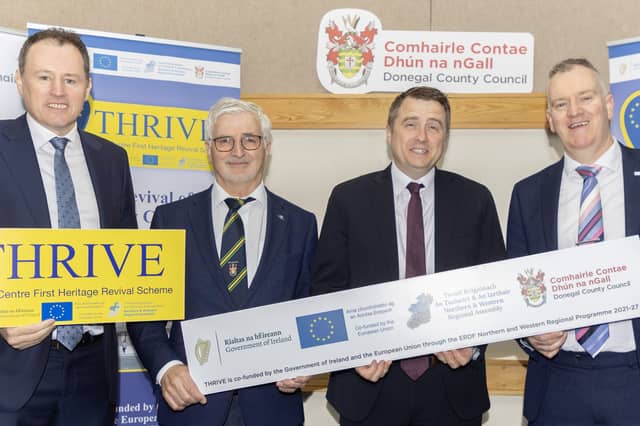

Funded under the THRIVE – Town Centre First Heritage Revival Scheme, the project is supported through the Northern and Western Regional Programme, co-funded by the Government of Ireland and the European Union through the European Regional Development Fund
Minister for Housing, Local Government and Heritage, James Browne TD, has officially launched the Revival of the Courthouse Letterkenny project.
The landmark €7 million regeneration initiative will transform the former courthouse into a vibrant regional community and tourism destination.
Funded under the THRIVE – Town Centre First Heritage Revival Scheme, the project is supported through the Northern and Western Regional Programme, co-funded by the Government of Ireland and the European Union through the European Regional Development Fund (ERDF).
The project will see the conservation, restoration and adaptive reuse of the former courthouse building, which has been vacant since 2018, bringing it back into active use at the heart of Letterkenny.
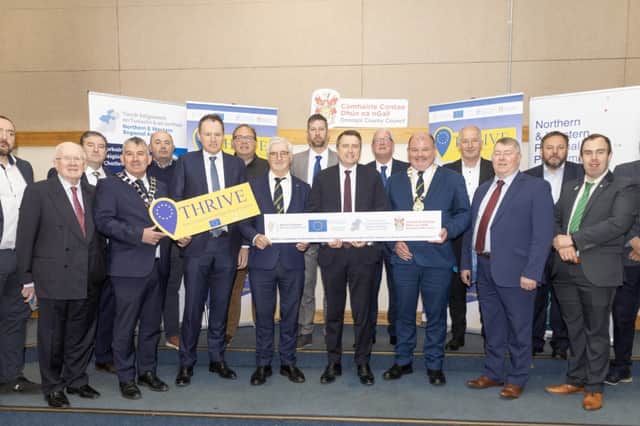
The initiative forms part of a wider national programme, with this project representing one of 19 THRIVE Strand 2 capital projects delivering transformational regeneration in towns and cities across Ireland.
Speaking at the launch, Minister Browne said: “This is a hugely important project for Letterkenny and the wider region. It demonstrates how strategic investment can breathe new life into our historic buildings and place them once again at the centre of community life.
Through the THRIVE scheme, we are supporting local authorities to tackle vacancy and dereliction, while creating vibrant, sustainable and inclusive spaces that people can enjoy and benefit from. The Revival of the Courthouse project is an excellent example of this ambition in action.”
The Minister also praised Donegal County Council for their leadership in developing the project: “Donegal County Council has shown real vision and ambition in bringing this project forward. In particular, their extensive engagement with citizens and stakeholders to co-design the future use of this building was a key strength of the proposal and an important factor in securing funding.”
Speaking at the Launch of the project, Mayor of the Letterkenny-Milford Municipal District, Cllr Ciaran Brogan said: “This investment is a demonstration and commitment for real regeneration in the heart of Letterkenny that will create real activity and increase footfall in the town, with the strong partnership approach here and indeed provide opportunities for tourism in Donegal and the wider Northwest region.”
Chief Executive of Donegal County Council, John G. McLaughlin stated: “The Revival of the Courthouse launch not only represents a huge milestone for an iconic property in the centre of Letterkenny, but also signifies the next step in revitalising our town centre, while providing an exemplar tourist experience that can be enjoyed by all.”
The Revival of the Courthouse launch not only represents a huge milestone for an iconic property in the centre of Letterkenny, but also signifies the next step in revitalising our town centre
The project aligns closely with the Government’s Town Centre First policy, which aims to tackle vacancy and revitalise town centres, and embraces the values of the New European Bauhaus, promoting projects that are sustainable, inclusive and aesthetically enriching.
Director of the Northern and Western Regional Assembly, Conall McGettigan, welcomed the launch: “The Regional Assembly supports balanced regional development and the revitalisation of towns as outlined in our Regional Spatial and Economic Strategies. The launch of this THRIVE project is a positive example of the use of ERDF funding to assist heritage regeneration projects in some of our counties’ key urban centres, enabling local authorities and communities to revitalise a number of landmark heritage assets all over our region.”
THRIVE is a €128 million national programme supporting local authorities to reimagine and transform publicly owned vacant or derelict heritage buildings into sustainable community assets, helping to strengthen the role of town centres as focal points for economic and social activity.