Search


21 Apr 2026
Search
21 Apr 2026

Please allow ads as they help fund our trusted local news content.
Kindly add us to your ad blocker whitelist.
If you want further access to Ireland's best local journalism, consider contributing and/or subscribing to our free daily Newsletter .
Support our mission and join our community now.
To continue reading this article, you can subscribe for as little as €0.50 per week which will also give you access to all of our premium content and archived articles!
Alternatively, you can pay €0.50 per article, capped at €1 per day.
Thank you for supporting Ireland's best local journalism!


Two legal challenges taken against the Government over super junior ministers have failed in the High Court.
The politicians said that they would decide whether to appeal to the Supreme Court after reading the full judgment over the Christmas period.
A case against the Taoiseach, the Government of Ireland, and the Attorney General had been taken in relation to whether the coalition had breached the constitutional limit of 15 ministers by appointing “super” junior ministers – or junior ministers who can attend confidential Cabinet meetings.
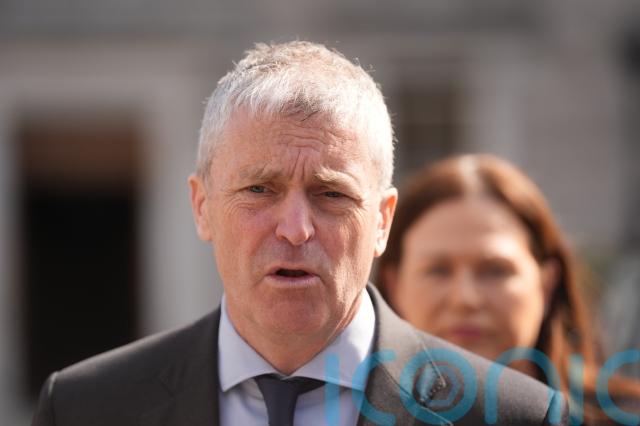
People Before Profit TD Paul Murphy had argued that the attendance of super junior ministers at Cabinet is inconsistent with the Constitution which states that the government “shall consist of not less than seven and not more than 15 members”.
He had argued that four super junior ministers had attended Aras an Uachtarain with the 15 senior ministers who received their seal of office from the president in January.
Sinn Fein TD Pa Daly had challenged the Government’s appointment of super junior ministers on the basis that it caused issues for Cabinet confidentiality as well as an issue of expenses and allowances paid.
Reading out the judgment on Friday, president of the High Court Mr Justice David Barniville said he and his two colleagues had rejected the arguments made by Mr Daly and Mr Murphy “in their entirety”.
He said that just 15 ministers from the present Government were appointed by the president, despite the attendance of four junior ministers at the Aras in January.
He said the suggestion by Mr Murphy that super junior ministers are not subject to Dail scrutiny in the same way as senior ministers was “justiciable”.
He said it was accepted by Mr Murphy that if there was a vote on a decision at Cabinet, super junior ministers would not take part and so their attendance would “not undermine the decisions taken by the members of the Government”.
He also said that at incorporeal meetings of government, only the 15 members of Government are telephoned.
He said: “Ministers of State (including super junior ministers) are never telephoned and asked their views at an incorporeal meeting because they are not members of the Government and have no decision-making role.”
In relation to the Cabinet confidentially issue challenged by Mr Daly, the judges said there was no limit to who can attend Cabinet meetings of 15 ministers.
They said: “We are satisfied that there is no constitutional provision, express or implied, which limits the attendance at meetings of the Government to the 15 ministers who were appointed by the president (including the Taoiseach).”
The judges said there was “no constitutional provision, express or implied”, and so no “disregard” of any constitutional provision by the regular attendance at Cabinet by ministers of state or super junior ministers.
“As no disregard – and certainly no clear disregard – of the constitutional parameters to the exercise of government power or breach of the constitutional provisions concerning the Government has been established, we are satisfied that deputy Daly’s claim must fail and he is not entitled to the declaratory relief which he seeks in these proceedings,” they said.
Speaking outside the Four Courts after the judgment, Mr Murphy was asked whether the judgment meant even more junior ministers could attend Cabinet meetings.
He said “respectfully to the court, that does seem to be the case”.
“It seems to be saying that there is no limit, that effectively – we were talking inside – that every member of the Dail and Seanad could be invited to participate in Cabinet discussions. I think that’s problematic,” he said.
“But again, we need to read the full decision and study the judgment.”
He and Sinn Fein leader Mary Lou McDonald said they would consider whether to appeal the case to the Supreme Court over the Christmas break.
Ms McDonald said that when “a record number” of super junior ministers had been appointed in January, they knew “we had to seek clarity on this question”.
“It remains our firm position that nobody in political life should have the opportunity to play fast and loose with the Constitution and with its rules in order to secure political outcomes that they desire, and that’s the reason we brought this case,” she said.
Mr Murphy said: “The central issue here is whether the Constitution can simply be got around, as Leo Varadkar suggested successive governments have been doing.
“We’ll read the judgment over Christmas. Obviously, we have a decision to make in the coming period about whether we pursue this and appeal this to the Supreme Court, and we’ll make that decision in the cold light of day, having fully considered all that’s in the judgment.”
The case is back before the courts on January 15.

Subscribe or register today to discover more from DonegalLive.ie
Buy the e-paper of the Donegal Democrat, Donegal People's Press, Donegal Post and Inish Times here for instant access to Donegal's premier news titles.
Keep up with the latest news from Donegal with our daily newsletter featuring the most important stories of the day delivered to your inbox every evening at 5pm.

This publication supports the work of the Press Council of Ireland and Office of the Press Ombudsman, and our staff operate within the Code of Practice of the Press Council. You can obtain a copy of the Code, or contact the Council, at www.presscouncil.ie, Lo-call 1800 208 080 or email: info@presscouncil.ie.