Search


21 Apr 2026
Search
21 Apr 2026

Please allow ads as they help fund our trusted local news content.
Kindly add us to your ad blocker whitelist.
If you want further access to Ireland's best local journalism, consider contributing and/or subscribing to our free daily Newsletter .
Support our mission and join our community now.
To continue reading this article, you can subscribe for as little as €0.50 per week which will also give you access to all of our premium content and archived articles!
Alternatively, you can pay €0.50 per article, capped at €1 per day.
Thank you for supporting Ireland's best local journalism!

The spring cost-of-living package, featuring 1.3 billion euros of measures, aims to target support towards families of school-age children struggling with bills, the Government said.
Tax measures are expected to give further relief to the general population as inflation continues to put pressure on households – but there will be no summer energy credit.
Taoiseach Leo Varadkar said this further intervention, after a cost-of-living package of 4.1 billion euros announced in September as part of the budget, aimed to help families and businesses to get through the spring and summer.
“It is more targeted than previously, but there are universal measures as well,” he said.
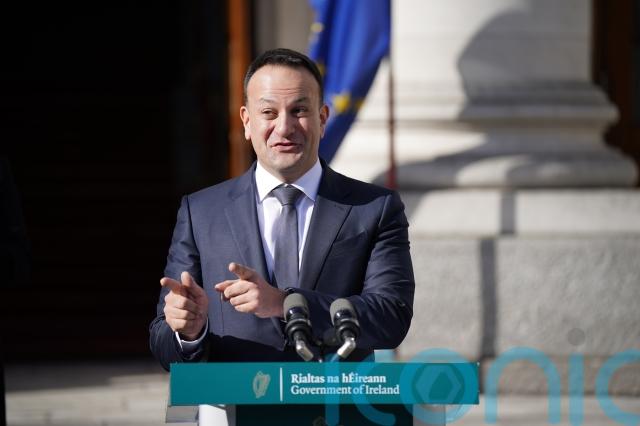
“There won’t be energy credits over the summer period, but we do have the option in the next budget of restoring energy credits to help people with their winter electricity bills.
“But that will depend on whether or not electricity prices come down between now and then,” the Taoiseach added.
Included in the package is a 200-euro payment for working families on low incomes; a 200-euro lump sum for pensioners, carers, people with disabilities, widows and lone parents in April; a 100-euro sum for child benefit recipients in June; and 100 euros added to the school clothing and footwear allowance.
State examination fees are being waived once again, and school transport fees will increase to a “modest” charge, Mr Varadkar said – costing 50 euros per primary school student, 75 euros per secondary-level pupil, and with a cap of 125 euros per family.
“I do think that bringing a modest charge in does make some sense. I can’t quantify it, but certainly my backbenchers will say to me that they have seen evidence of people taking up the concessionary pass, maybe only using it one day a week or once every two weeks, meanwhile, other children then don’t get a pass,” he said.
“So it’s a much lower fee that would have been charged in the past.”
The hot school meals programme is to be extended to primary schools with DEIS status and all special education schools; expanding the scheme to non-DEIS schools will be looked at as part of Budget 2024.
The total cost of social protection measures is 470 million euros.
The Temporary Business Energy Support Scheme (TBESS), due to run out at the end of the month, is to be extended until the end of May.
It will also be tweaked so that businesses will only have to show an increase in electricity or gas costs of 30% rather than 50% since September last year, after ministers expressed disappointment with the low level of take-up.
The level of relief available will also increase from 40% to 50%, subject to a monthly limit and with an overall cap of 45,000 euros. The cost of the extended scheme will be met from the allocation provided in Budget 2023.
“It means more businesses will qualify, they will qualify for more financial support, and it will be backdated to September,” Mr Varadkar said.
Work is also under way to develop a grant scheme for businesses that use LPG and kerosene, to reflect the energy usage of rural businesses.
The special 9% VAT rate for the tourism and hospitality sector is being extended until August 31 at an estimated cost of 300 million euros.
The reduced VAT rate of 9% on electricity and gas bills is being extended again until the end of October, which the Government said would be of “universal benefit” to people. This is at a cost of 115 million euros.
Excise on petrol and diesel, which was to go up at the end of February, will instead increase on a phased basis between June and the end of October.
A litre of petrol will go up by six cents on June 1, seven cents on September 1 and eight cents by October 31, a total of 21 cents.
A litre of diesel will go up by five cents in June and September, while a final increase of six cents will be added on in October. Marked gas will increase by one cent per litre in June and September, with a three-cent increase in October.
This measure is expected to cost 383 million euros.
Mr Varadkar added that a decision on the eviction ban, due to run out at the end of March, would be made in the coming two to three weeks.
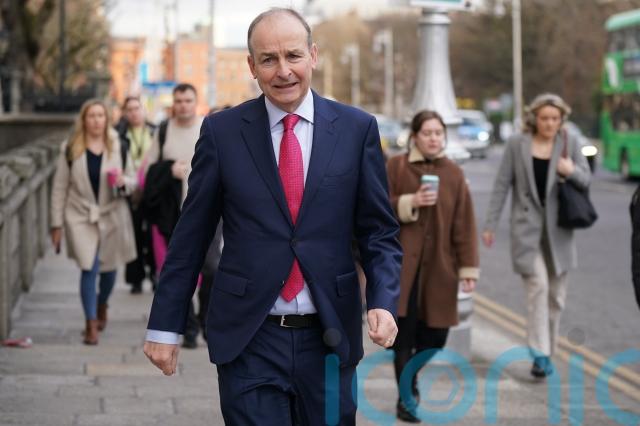
Tanaiste and foreign affairs minister Micheal Martin said that the economic supports needed during lockdowns imposed as part of the Covid pandemic “informed” their response to the cost-of-living crisis.
He said that the latest measures place “a particular focus on the most vulnerable and most exposed within our society”.
Minister for Transport Eamon Ryan said that they have listened to people in the country.
He said: “(We’ve been) meeting upstairs in the Sycamore Room with employers and the trade unions, listening to the Vincent DePaul (charity) say what we need to do now is really target the measures to protect those most at risk, those on lowest incomes.”
But he added: “We cannot put off forever in a day the restoration of our tax base because we need that in place so next October we’re able to deal with the ongoing demands of government.
“We’re stronger as a country because we’ve been responsible in managing the public’s money. Not blowing it all, not easy promises, not gimmicks, but thought-through measures (where) we listen to what our key players in our country (say) to get it right.”
Speaking before Cabinet, ministers suggested that further measures were appropriate, but added that there was enough financial “firepower” left for later in the year when they expect more supports would be needed.
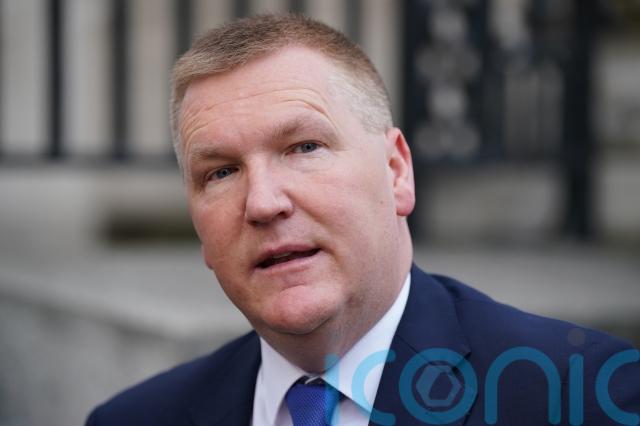
Finance Minister Michael McGrath said that deciding on the measures was a “fine balancing act”.
He said: “It is a matter of judgment. These are not easy calls to make. We recognise that people are under pressure, we have sought to target resources in the best way that we possibly can.”
Mr McGrath said “the key consideration” was to allow inflation to continue to fall, and to ensure there is capacity to respond with further measures later in the year.
“It’s important that we have that firepower. By acting prudently now, the Government will be in a position to help people more when we believe the need will be greater,” he said.

Subscribe or register today to discover more from DonegalLive.ie
Buy the e-paper of the Donegal Democrat, Donegal People's Press, Donegal Post and Inish Times here for instant access to Donegal's premier news titles.
Keep up with the latest news from Donegal with our daily newsletter featuring the most important stories of the day delivered to your inbox every evening at 5pm.

This publication supports the work of the Press Council of Ireland and Office of the Press Ombudsman, and our staff operate within the Code of Practice of the Press Council. You can obtain a copy of the Code, or contact the Council, at www.presscouncil.ie, Lo-call 1800 208 080 or email: info@presscouncil.ie.