
Oberstown workers picket Department of Children over staffing dispute
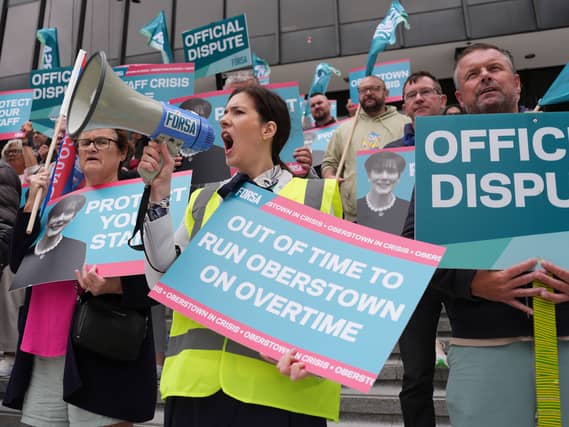

Fórsa union members have been engaged in a work-to-rule at Oberstown since the end of June.
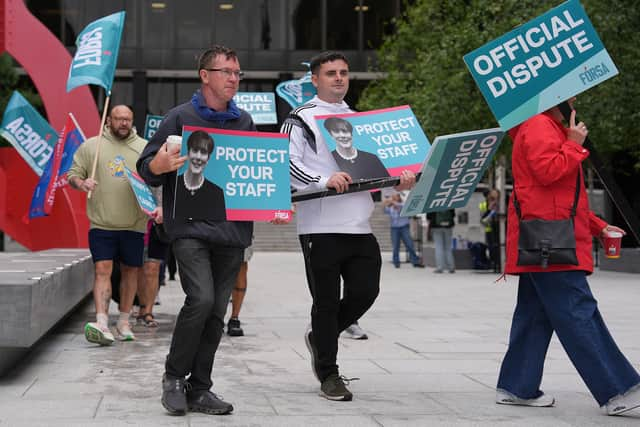
Workers from Oberstown Children Detention Campus have begun a protest outside the Department of Children as part of an ongoing industrial relations dispute.
The picket involving members of the Fórsa union coincides with a 10-hour work stoppage at the campus on Tuesday, which is the third such industrial action this month.
It comes after a ballot of Fórsa members which backed industrial action up to and including a full withdrawal of labour, with the union saying workers have previously reported “assaults on staff and injuries requiring hospital treatment in circumstances where staffing levels were stretched”.
The union members have been engaged in a work-to-rule at Oberstown since the end of June.
Fórsa expressed “frustration” and said efforts to engage with management on key issues “broke down last week”.
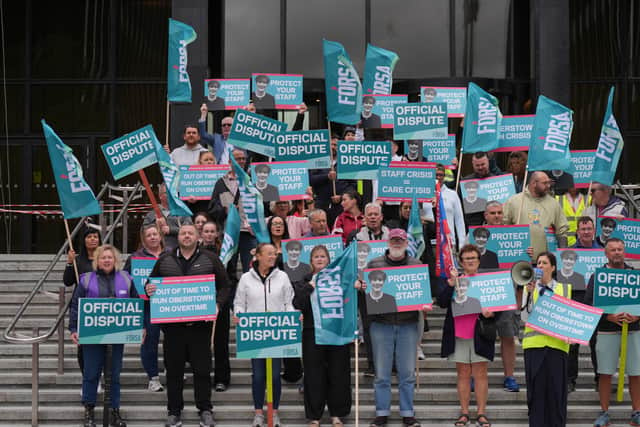
It said: “Safe staffing in Oberstown remains a concern for Fórsa members employed there.”
The union’s assistant general secretary Deirdre O’Connell said: “Oberstown management has refused to include key elements of Fórsa’s claim in its business case to the Department of Children.
“These include measures to address the recruitment difficulties facing the service, which management has said should be dealt with separately through ‘local bargaining’, while also acknowledging that there are not enough resources allocated to local bargaining to resolve them.
“The consequence of this approach is that it stalls efforts to resolve the issues in dispute and prolongs a situation where staff and residents face increased risks to personal safety.”
Oberstown said it “regrets” the work stoppage, adding: “We are disappointed that this escalation is taking place while engagement through the established industrial relations process remains ongoing.”
It said it and the Department of Children had engaged “extensively” with staff representatives, including through the Workplace Relations Commission.
The facility said it remains “fully committed to working constructively towards a resolution” and had taken a “proactive approach to strengthening frontline staffing”.
Fórsa’s media relations director, Niall Shanahan, told the Press Association that it was the union’s view that “safety has been compromised” by issues around recruitment, retention and capacity at the facility.
Oberstown challenged the union’s depiction of staffing issues, pointing to the recruitment of 23 frontline staff over the last year – and an overall net increase of nine frontline workers over the same period.
It said recorded campus incidents have reduced by 29% year-to-date compared with 2025, with “low-level physical interventions” reducing by 40% at the same time.
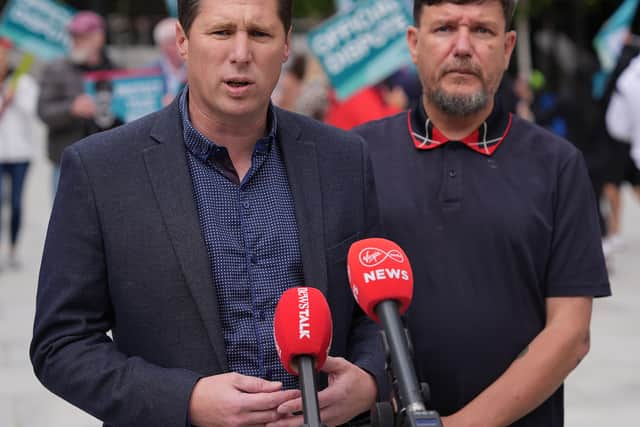
Sinn Féin justice spokesman Matt Carthy attended the picket and expressed “solidarity” with the staff of Oberstown as he criticised the current juvenile detention system as “not fit for purpose”.
He said: “The Minister for Justice and the Minister for Children cannot continue to ignore this issue.
“Safe staffing levels, staff welfare and effective rehabilitation programmes are all interconnected.
“Ministers must now engage constructively with workers and their representatives and put in place the resources required to ensure Oberstown can fulfil its vital role while also examining what additional places are needed.”
He added: “Investing in youth justice is one of the most effective ways to reduce crime and make communities safer.
“Alongside early intervention and diversion programmes, that requires a detention system that is properly staffed, properly resourced and focused on giving young people the opportunity to build a better future.”
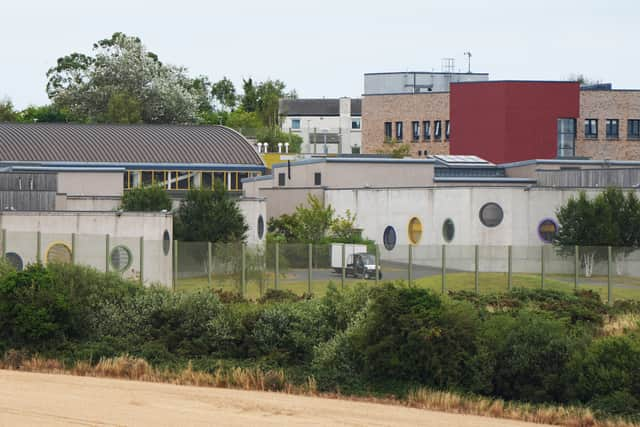
Oberstown was allocated more than 2.1 million euro in additional funding to address recruitment issues, and it is understood there is a view within the department that staffing is sufficient.
The facility has seen an increased demand to accommodate boys in recent years.
At the start of 2026, it had a capacity for 40 boys and six girls.
In February, Children’s Minister Norma Foley announced she would be changing that breakdown to 44 boys and two girls during the remainder of the year – starting with a move to a 42-four split in March.
Part of the increased demand is understood to relate to teenage boys participating in joy-riding activities.