
New ‘imperatives’ to consider in UK-EU relationship, Taoiseach says

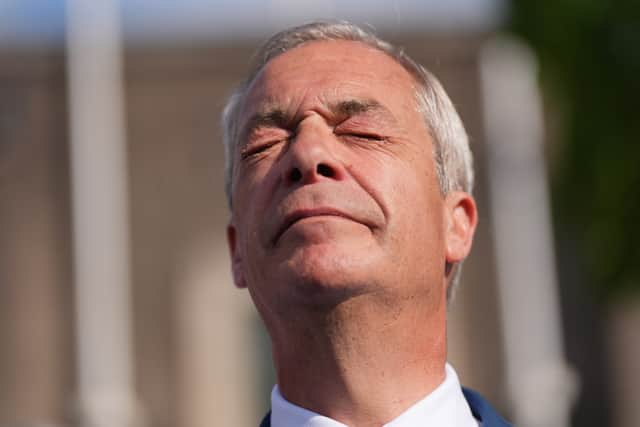
The UK has to deal with different “imperatives” in its relationship with the European Union after Brexit “irrespective of who’s in government”, the Taoiseach has said.
Micheal Martin was responding to a question on whether he was concerned a shift to a Reform UK government could impact UK-EU relations.
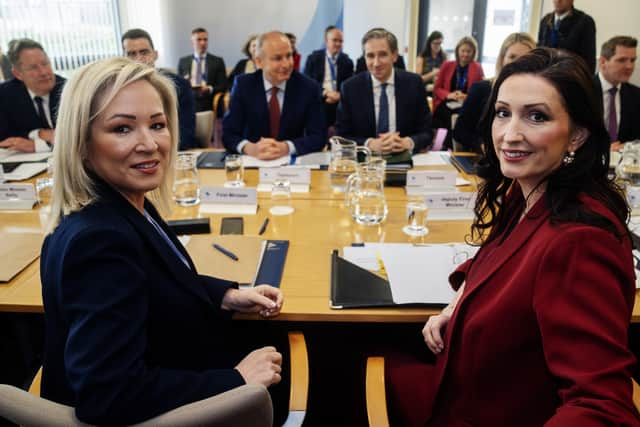
It was platformed as an opportunity for “pragmatic engagement” between the UK and the EU on issues affecting Northern Ireland at a meeting of the North-South Ministerial Council (NSMC) on Friday.
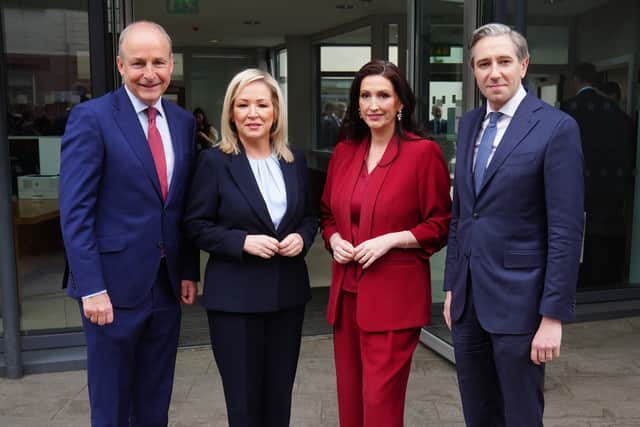
Among those attending the NSMC in Co Armagh were Irish premier Mr Martin, deputy premier Simon Harris, and Foreign Affairs Minister Helen McEntee as well as Northern Ireland’s First Minister Michelle O’Neil and deputy First Minister Emma Little-Pengelly.
He said: “It’s a sensible, pragmatic one, and we support the thrust of the desire to have a pragmatic, sensible relationship with the European Union – we think everybody can benefit from that.”
A press conference following the summit was held as counting continued in council elections in England – where pro-Brexit party Reform made major gains – as well as for parliament seats in Scotland and Wales.
Mr Martin said: “Our view is and our perspective is that we believe that a good relationship between the European Union and United Kingdom is an important one.”
He said “irrespective of who’s in government” there are “imperatives out there now” that were not present before Brexit.
Mr Martin told reporters: “Hence that growing rapprochement between European Union and the United Kingdom has that broader compass in mind, in terms of security and defence, European self defence.”
He added: “These are realities any government will have to deal with.
“Politicians generally can campaign in poetry – but have to govern in prose.”
Both he and Mr Harris cautioned that politics was becoming more fragmented across the world with the Tanaiste answering the same question: “In Ireland, we’ve worked long and hard enough to disentangle ourselves from British elections – so I’m not going to comment on an election that takes place in a different country.”
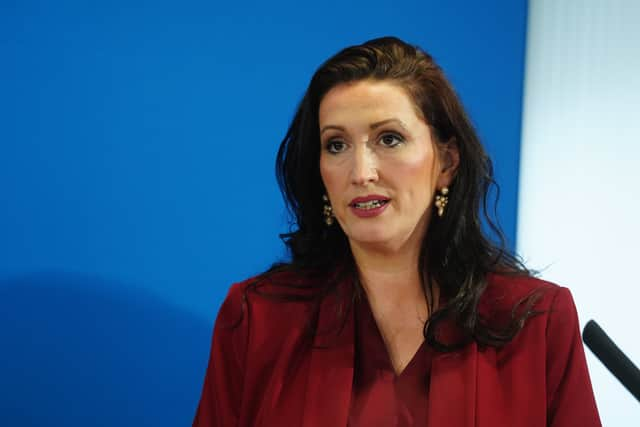
Meanwhile, Ms McEntee said the presidency will be an opportunity to “show that the EU-UK relationship will continue to be a priority for Ireland”.
She said a UK-EU summit is an opportunity to show progress on some key areas including issues around phytosanitary rules and the emissions trading systems.
Ms Little-Pengelly said she was hopeful the presidency would offer opportunities for “pragmatic engagement”.
She said the key challenges faced by the EU are very similar to those faced by the UK, with global instability impacting on energy security and costs faced by citizens.
Mr Harris said all the leaders were “committed to further developing that conversation” around energy security and resilience.
The Tanaiste said: “We need to do better collectively in terms of developing policy responses there – interconnectors being a part of that, renewables being a part of that, learning from each other around retrofitting and supports being a part of that.”
Ms Little-Pengelly also expressed hope that the UK could be included in the EU’s Security Action for Europe (Safe) defence fund, adding that Northern Ireland has a “very strong” aerospace and defence sector.
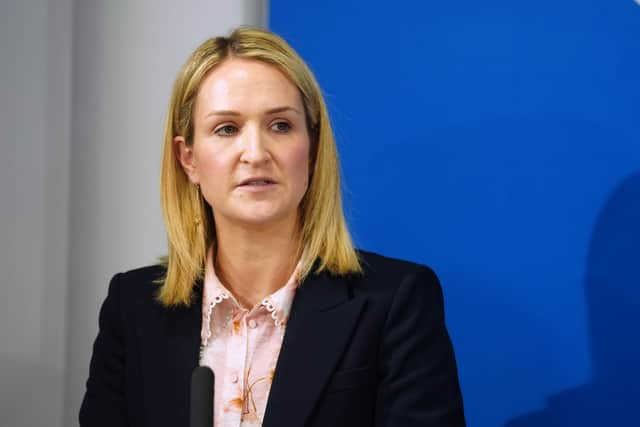
The deputy First Minister said cooperation between the UK and EU on defence as well as issues around cyber security and undersea cables is “both logical and also important”.
Ms McEntee emphasised the need for the EU, UK and US to work closely together on “overall security” and called for increased work on protecting critical underwater infrastructure.
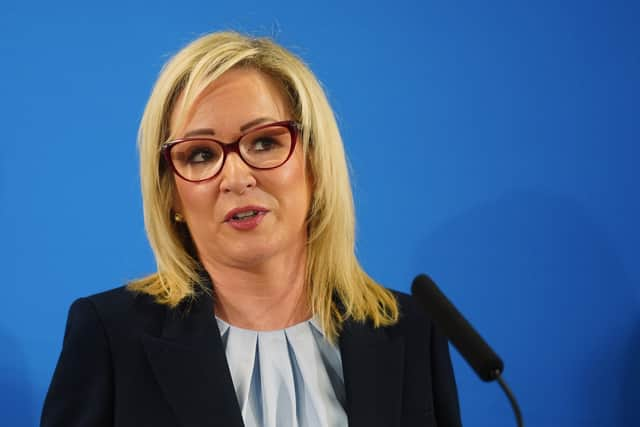
Sinn Fein’s deputy leader said they discussed plans around energy security, large infrastructure projects including the Ulster Canal and the A5 as well as Ulster University’s Magee campus and air connectivity between Dublin and Londonderry.
Ms Little-Pengelly also told reporters that there were remaining issues with the post-Brexit Windsor Framework trade agreement, adding there was a high level of “entirely unnecessary” and “disproportionate” bureaucracy affecting Northern Ireland businesses which were under financial pressure.
The Council meeting came a day after the leaders attended a signing ceremony for the delivery of faster trains between Belfast and Dublin, to enter service in 2030.