
EXPLAINER: What are the rules around wild camping in Ireland?

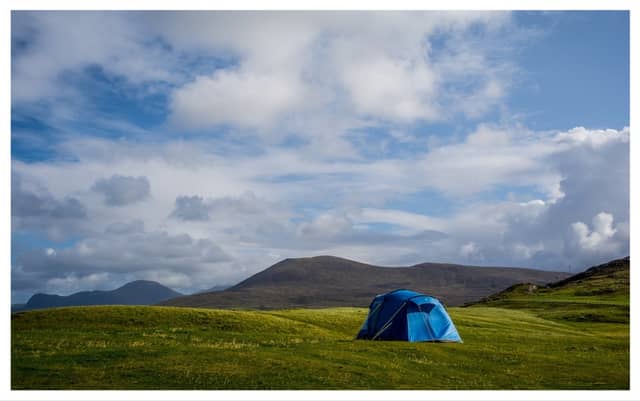

With summer fast approaching, it's important to be aware of Ireland's tricky rules around wild camping before you set about pitching your tent
As the longer evenings have finally returned, many people may decide to try their hand at wild camping this summer. However, the laws surrounding wild camping in Ireland are not so straight forward and it can be difficult to find out whether it is actually legal to set up camp at people's chosen destination. So just what are the rules?
In Ireland, land is either privately owned or owned by state organisations. Other countries like the UK do have designated recreational land areas but Ireland does not, meaning that laws surrounding wild camping is not at all straight forward as it would be in these countries.
You might think that public lands mean that the public have access rights to such areas for the purpose of camping, but not necessarily. Whether the land you want to camp on is public or private, you do need permission before heading out on your trip.
READ NEXT: Irish people urged not to get caught out travelling in Europe without this essential item
Designated safe spaces
Whether or not you can camp on private land is of course at the discretion of the owner of the property. However, some state owned land does have designated camping areas where you are free to set up camp safely and legally.
Coillte have been developing a number of wild camping sites across their lands which can be used by hikers to camp overnight. Hikers must have their own equipment and the sites typically have room for one or two tents. These sites are usually beside a National Waymarked Way as well as a stream or watercourse.
Currently there are wild camping sites at Coillte lands at the Slieve Blooms, Glenbeigh/Iveragh Penninsula, Knockmealdowns and in North Mayo. New sites will also be added soon.
It is also possible to partake in wild camping at some national parks or nature reserves in Ireland. However, it is important to note that every national park will have different policies when it comes to camping and so it is crucial that you check these out before you set off on your trip.
Leave No Trace
Camping on Coillte lands and most other sites like many of the national parks follow the principals of the Leave No Trace policy. This involves leaving campsites visually unobtrusive and free of all waste, litter, food and anything not biodegradable.
Some interesting rules under this umbrella includes that fires should only be lit where a fire ring is officially provided and then completely extinguished before the campsite is vacated. Many of the national parks do not allow any fires to be lit at all so it is important that you are clear on the rules surrounding camp fires wherever you decide to camp.
Additionally, on Coillte sites, campsites should also not be used for more than one consecutive night and people should not camp among trees if there are high winds or if high winds are forecasted.
Plan ahead
Wherever you decide to go this summer to camp, make sure you plan ahead. Check with the owner of the land before you set up camp to ensure that you have permission and that you follow all the safety rules.