
Ancient nobles’ ringfort revealed by archaeologists
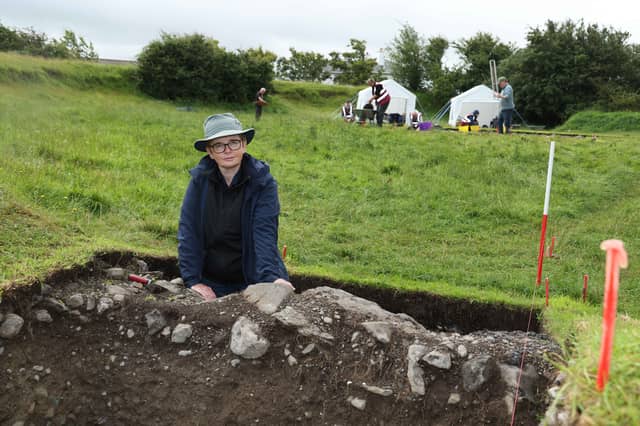

A ringfort overlooking Galway Bay has been confirmed as a settlement for rulers and nobles in Ireland’s Early Medieval period, according to archaeologists.
Rathgurreen Ringfort, in the Maree area of Co Galway, has been described as an impressive “high-status” settlement that could date anywhere from the 5th to 12th century AD.
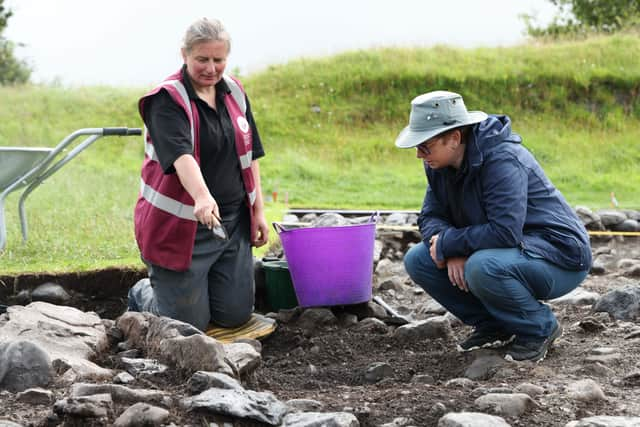
The ringfort was first investigated and proposed as a high-status settlement – home to a local ruler such as a king or lord – by Professor Michael Duignan, then chairman of archaeology at the university, in the late 1940s.
Excavations now suggest that parts of the site are potentially 1,000 years older than previously thought, with evidence of contact with Rome, Scotland, France, and Scandinavia, possibly including the trade of valuable purple dye made at Rathgurreen.
Dr Comber, lecturer in archaeology at the university, said: “What we can say with some certainty is that Maree is an ancient territory.
“Our research confirms that Rathgurreen was the home of a noble family – hence the description as high-status.
“But the story is much deeper and richer. We have evidence of continuity and change at this site – a settlement that possibly dates back to the Iron Age, that was later developed into a very fine ringfort.
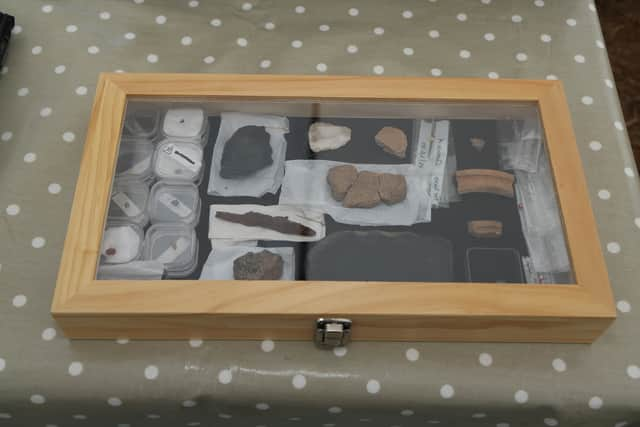
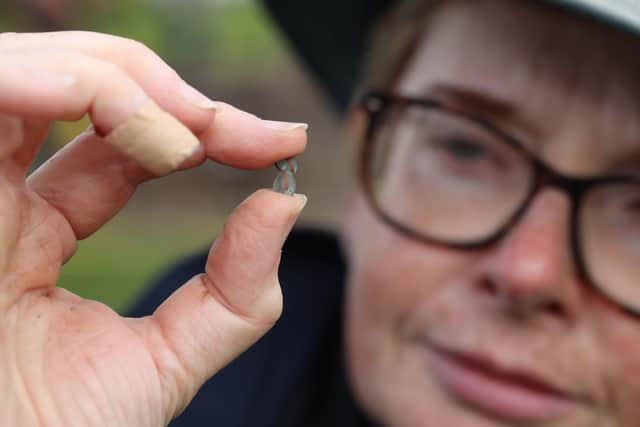
The archaeology team found a number of glass beads, some coloured blue and another turquoise and red.
These have parallels in other parts of Ireland and Scotland in the Iron Age – the era that immediately precedes the Early Medieval period.
The dig has also confirmed the presence of Early Medieval pottery from northern France and amber beads likely connected with Scandinavian trade routes used by the Vikings.
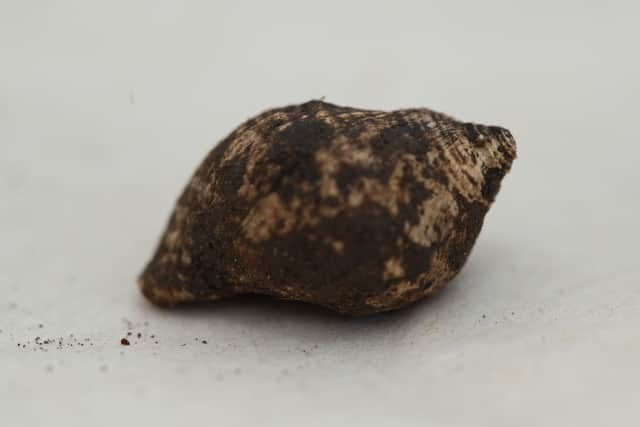
Evidence of the manufacture of purple dye at Rathgurreen comprises the remnants of dog-whelk shellfish that were processed at the settlement to produce the rare and valuable colouring.
Dr Comber added: “We are working in an ancient high-status settlement located roughly mid-way along the Atlantic seaboard.
“The big takeaway from this site is that a place like Galway had a wider significance in the past, and that significance translates into the present.”
The excavation marks the launch of a research project exploring land use through time on the Maree peninsula in Galway, with the university team hoping to continue digs at the site in 2026 and to pursue other locations in the area in future years.
Community volunteers, University of Galway archaeology students, and international students from Uppsala University in Sweden came together to investigate the site and put into practice skills vital to careers in the archaeological profession.
The wider project involves work with local, national and international communities as well as the development of a conservation management plan for Rathgurreen in conjunction with landowners and experts, through a community monuments fund with Galway County Council.