
‘All strands’ of nationalism must join single forum to push for Irish unity – SF
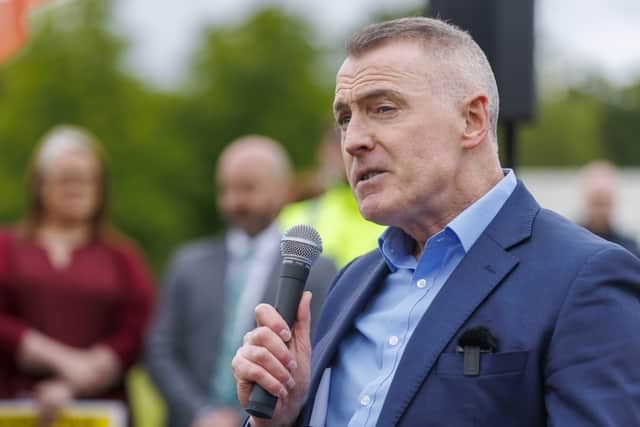
Sinn Fein’s Declan Kearney called for an initiative inspired by the Hume-Adams talks.
It is time for “all strands” of political nationalism in Ireland to gather in a single forum to plan for constitutional change, a senior Sinn Féin figure has said.
The party’s National Chairperson Declan Kearney said a new initiative inspired by the Hume-Adams talks could bring increased momentum to discussions around Irish unity and urged unionist political parties to “join the debate”.
Talks between former SDLP leader John Hume and then Sinn Féin president Gerry Adams in the late 1980s and early 1990s are regarded a key catalyst for the nascent peace process prior to the signing of the Good Friday Agreement.
Writing in the republican publication An Phoblacht, Mr Kearney said the Hume/Adams talks “influenced Irish government policy” in the early 1990s.
He said the initiative still “provides a valuable reference point”.
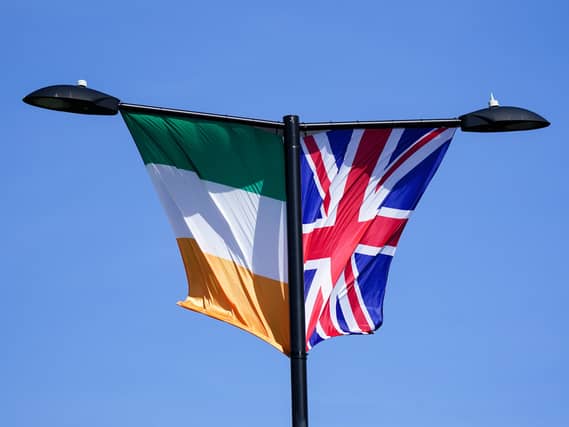
Under the terms of the 1998 Belfast/Good Friday Agreement, the Northern Ireland Secretary can decide to hold a border poll, and also places a duty on the office holder to call one if it appears likely a majority would vote for Irish unification.
The people of the Republic of Ireland must also vote in favour to effect constitutional change.
Mr Kearney said British and Irish politics “have been and remain in constant flux” and that unity “is on the political horizon”.
Mr Kearney said: “Increasing numbers of citizens from the protestant section of the northern society are engaging with and giving leadership on the question of Irish unity.
“It makes no sense for political unionism to try and ignore the change which is happening. Unionist parties should join the debate.
“Sinn Féin is unambiguous; unionist and protestant people must exercise a fundamental political and social influence in the creation, and governance of a future united Ireland.”
In July, the republican party tabled a Bill on Irish unity in the Dáil that would have required a Green Paper on the issue to be published within 18 months, as well as provide for the convening of a Citizens’ Assembly.
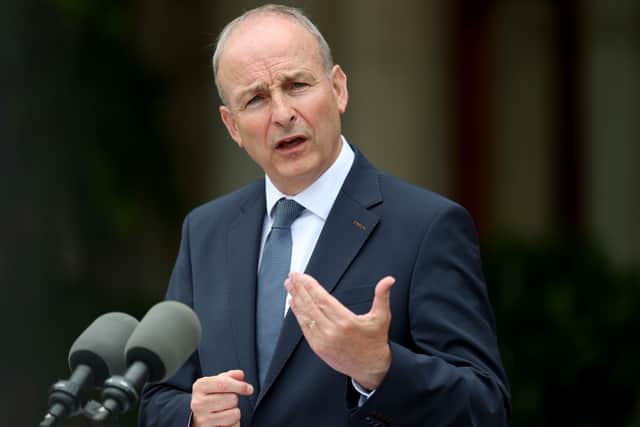
Irish premier Micheál Martin said at the time the unity Bill was “not credible”.
Mr Kearney said the Bill would be brought back to the Dáil before the end of the year.
He added: “It is clear that Irish Taoiseach Micheál Martin is the single biggest impediment to this Irish government embracing its constitutional obligation to proactively support Irish unity.
“By contrast, the Tánaiste and leader of Fine Gael, Simon Harris, has announced his party will launch a blueprint, or roadmap, for Irish unity at its conference in November.
“The significance of this development should not be underestimated.”
He added: “Both Sinn Féin and the SDLP have been organising constructive and well attended public engagements on building a new Ireland under the auspices of their respective party commissions on the future of Ireland.
“There is widespread acceptance and recognition in Irish civic society of the need for a structured discussion on constitutional change, to pave the way for a unity referendum, and create the legislative modalities for a transition to Irish unity.”
The Sinn Féin MLA said the UK Government would only move on calling a referendum when it is “pressured to do so”.
He said: “The full focus of Irish political and civic opinion must now be brought to bear on realising this objective.
“Asserting and securing the right to self-determination should be above party political differences.”
Mr Kearney added: “The Hume/Adams experience should be a present-day incentive for all parties within the national democratic tradition, including the Irish government, to affirm political principles and objectives for the achievement of Irish unity.
“It is time for all strands of Irish national democratic opinion to gather in a single political forum or convention to deliberate, agree, and, then speak with one voice on how to plan for Irish unity, and initiate the constitutional transition.
“This could shape the terms of a new conversation between the Irish and British governments to end partition, jointly manage transfer of sovereignty over the north to the Irish state, and address the future relationship between these islands.
“National democratic consensus was crucial to delivering the Irish peace process.
“A new initiative informed by that seminal experience can today bring momentum to achieving the right to exercise Irish national self-determination, and begin the transition to a reconciled, united Ireland.”